
Healthcare PA Speaker System: A Complete Design Guide for Hospital PA and Communication Systems
Modern hospitals operate around the clock. Every second counts during a Code Blue. Every announcement reaches patients trying to rest and staff trying to save lives. The audio infrastructure running through corridors, patient rooms, and emergency departments isn’t simply about making noise—it’s about delivering critical messages precisely when and where they matter most.
Between 2015 and 2026, healthcare facilities have undergone a fundamental transformation in how they approach audio, paging, and notification systems. The shift from legacy analog 70V backbones to IP-based architectures has opened new possibilities for integration, management, and reliability, directly impacting patient care and operational functionality. reliable connections between audio systems, control networks, and emergency communication devices are essential to enable flawless communication and system supervision.
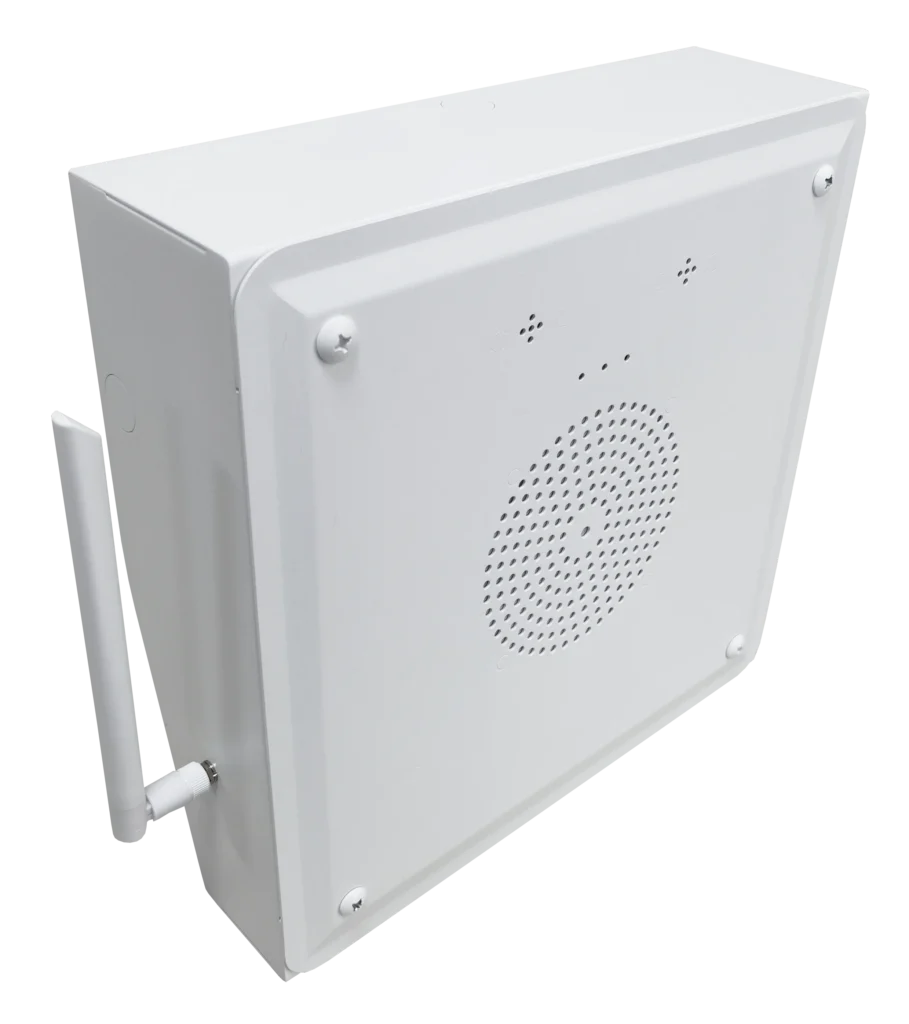
Admoveo Systems specializes in maintenance-free, IP sound solutions specifically engineered for healthcare environments. Our systems are designed for 24/7 operation with low-touch maintenance and remote monitoring capabilities that facilities teams actually appreciate. Modern device management platforms now allow facilities teams to monitor and manage IP endpoints in real time, ensuring system operational performance.
Whether you’re designing a new tower, renovating an existing wing, or upgrading a decades-old paging system, this guide delivers practical direction for engineers, low-voltage contractors, and architects working on public address and critical communication systems for hospitals.
The goal is clear: improve patient safety, reduce code response times, and boost HCAHPS-related patient satisfaction scores by improving audio system connectivity.
Sound masking systems, increase patient privacy by using white or pink noise to mask conversations, help ensure HIPAA compliance by reducing sound transmission in sensitive areas like reception zones and through exam room walls and doors, and result in higher HCAHPS scores by creating a quieter, more restful atmosphere that aids in patient recovery.
Let’s walk through what that takes.
Introduction to Health Systems
Healthcare systems remain detailed networks that unite healthcare facilities, providers, and advanced technologies to deliver integrated patient care. Within these environments, effortless communication is not merely a convenience—it is an essential part of safety, efficiency, and quality outcomes. Healthcare providers depend on solid communication systems to ensure that critical messages, emergency alerts, and important information reach the right individuals at the right time.
Modern healthcare facilities utilize IP endpoints—such as networked speakers, paging systems, and intercoms—to create an interactive communication infrastructure. These devices enable staff to communicate quickly and clearly with patients, visitors, and colleagues across public areas, waiting rooms, and throughout the facility. Whether it’s broadcasting emergency alerts, sharing routine updates, or delivering critical instructions during an incident, these systems help maintain a safe and well-coordinated environment.
By integrating advanced communication solutions, medical systems can improve patient care, streamline operations, and enhance the overall experience for everyone in the facility. Effective paging and alerting ensure that staff can respond rapidly to emergencies, while explicit communication in waiting rooms and public areas keeps patients and visitors aware and reassured. Ultimately, a well-designed communication system is foundational to the proper operation and excellent care that modern healthcare environments demand.
Core Requirements for Hospital PA and Audio Systems
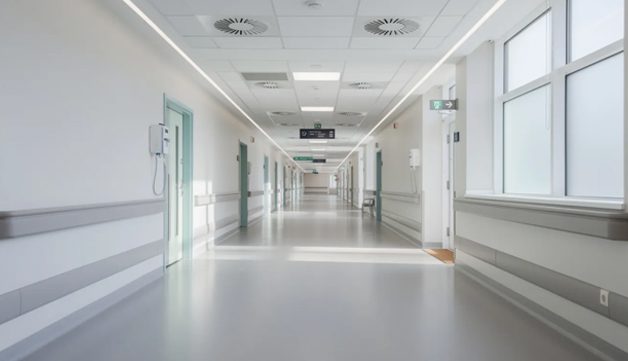
A hospital PA system in North America must accomplish several fundamental tasks: support emergency codes, deliver routine announcements, and enable evacuation communications that meet local Authority Having Jurisdiction (AHJ) requirements. These aren’t optional features—they’re baseline functionality that every system must provide.
Here are the key technical requirements that define a properly designed hospital audio system:
| Speech Intelligibility (STI) | 0.50 minimum, 0.65+ recommended |
| Zoned Paging | Independent control by department/floor |
| Redundancy | Decentralized processing, dual paths |
| Fire Alarm Integration | NFPA 72 compliant voice evacuation |
| Code Support | Blue, Red, Black, and facility-specific codes |
Systems must support common hospital emergency codes with both pre-recorded and live announcement capabilities. Code Blue cardiac arrests, Code Red fire events, Code Black severe weather—each requires immediate, explicit communication across targeted zones or facility-wide as the situation demands.
Centralized management and endpoint supervision capabilities are essential, and usability plays a critical part in this context. User-friendly management tools that provide a single-pane view allow efficient, simple oversight of large-scale IP endpoint connections.
The regulatory and standards context includes:
- NFPA 72 for fire alarm integration and voice evacuation
- NFPA 101 for life safety egress and notification
- HIPAA considerations where voice privacy intersects with sound masking in public areas
Admoveo designs address both renovations of legacy analog systems (pre-2010 installations) and greenfield IP-based designs in new towers or outpatient facilities. The approach differs based on existing infrastructure, but the performance targets remain consistent.
Leveraging Existing Network and Telephony Infrastructure
The days of running dedicated speaker wire throughout a facility are fading. Modern healthcare audio technologies leverage the same Ethernet network infrastructure that powers phones, computers, and medical devices. This switch from analog 70V paging backbones to IP endpoints connected over existing cabling fundamentally changes how systems are designed, installed, and maintained.
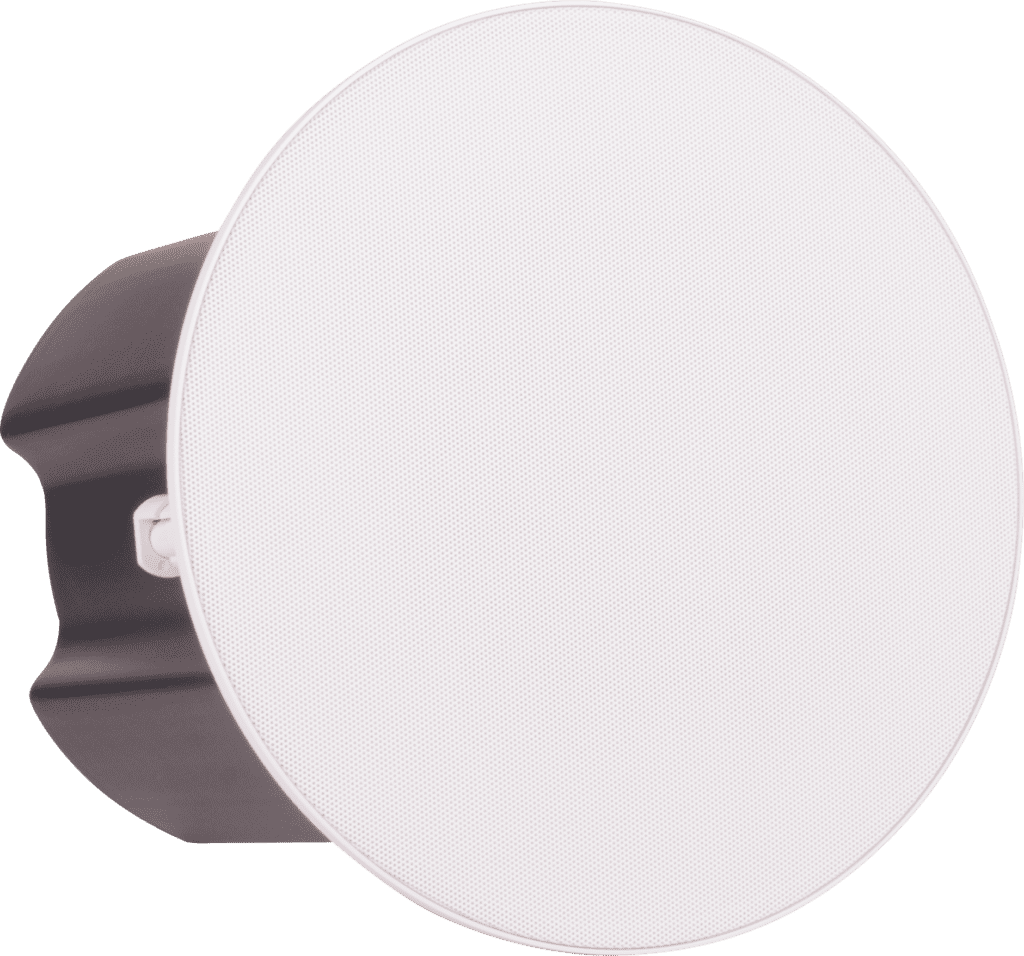
Admoveo IP speakers, ceiling tiles, and wall plates connect via PoE switches and use SIP protocols used to integrate with existing VoIP systems. Whether your facility runs Cisco CallManager, Avaya, Mitel, or Microsoft Teams-based solutions, the audio infrastructure can tap into the same telephony backbone for paging and intercom functionality.
Design Guidance for Network Integration
Engineers should plan for audio traffic segmentation to ensure reliable operation:
- Dedicated VLANs for paging and notification traffic
- QoS markings prioritizing audio streams (typically DSCP EF for voice)
- PoE+ capable switches (IEEE 802.3at) for endpoints needing higher power
- Multicast support for efficient zone-based paging
Legacy analog PA systems don’t need immediate replacements with the use of SIP paging gateways. The X10 paging gateway allow phased modernization that spreads capital costs across multiple budget cycles.
Leveraging current cabling and switches reduces both equipment costs and installation windows. Facilities can often avoid the disruption of running new cable through occupied patient areas while still gaining centralized management and endpoint supervision capabilities.
Endpoint Types and Zoning Strategy
Selecting the right endpoints for each area and organizing them into logical zones determines how effectively employees can communicate with patients, visitors, and each other.
Common endpoint types for hospitals include:
- IP ceiling speakers for corridors and patient rooms (typically 4-6” drivers)
- Wall-mount speakers for waiting rooms and family lounges
- Outdoor horns for ambulance bays, helipads, and parking structures
- Combination speaker/strobe units for high-noise spaces like mechanical rooms
- Flush-mount ceiling tiles for aestheticallyappealing in lobbies and admin areas
Zoning best practices recommend separate zones for:
| OR Suites | Limited routine paging, emergency override only |
| ICU/NICU | Reduced volume, critical alerts only |
| Emergency Department | High intelligibility, frequent updates |
| Imaging (MRI/CT) | Minimal audio during procedures |
| Public Lobbies | Background music, general announcements |
| Staff Workrooms | Full paging, intercom capability |
| Exterior/Helipad | Weather-resistant, high SPL |
Modern healthcare audio platforms allow staff to monitor and manage endpoints from any location, delivering flexibility and remote management capabilities for large healthcare facilities.
Granular zoning makes certain that non-urgent announcements about cafeteria hours don’t disturb patients in the neonatal unit or wake individuals in sleep study labs. Meanwhile, urgent codes can still override everywhere as required by facility protocols.
Admoveo configuration tools allow architects and system designers to model zones from floor plans before construction begins. This early coordination minimizes change orders and ensures the installed system matches performance requirements from day one.
Network Security and Effectiveness
In today’s healthcare environments, network security and operational functionality are paramount for protecting sensitive patient data and ensuring uninterrupted communication. Healthcare facilities must adhere to strict HIPAA compliance standards that require robust safeguards to prevent unauthorized access to critical systems and confidential information. This means implementing secure connectivity protocols, encrypting data transmissions, and verifying the identity of every device and user connected to the network.
Efficient management of IP endpoints—such as speakers, paging systems, and other communication devices—is necessary for maintaining the reliability and security of medical communication systems. By centralizing endpoint management and monitoring, medical professionals can quickly detect and address potential vulnerabilities, reducing the risk of critical incidents that could disrupt patient care or threaten safety.
Prioritizing network security not only protects sensitive information but also ensures that communication systems remain operational during emergencies. Reliable connectivity supports the rapid delivery of alerts and critical messages, enabling staff to swiftly respond to any situation. Additionally, efficient network operations reduce costs and improve workflows.
By investing in secure, efficient network infrastructure and preemptive endpoint management, healthcare organizations can support high-quality patient care, maintain regulatory compliance, and build a foundation for future-ready communication solutions.
Emergency, Life Safety, and Code Paging
Audio plays a central role in hospital emergency operations. Rapid code notification, fire evacuation instructions, severe weather alerts, and security incidents all depend on reliable, intelligible communication reaching the right people in the right locations.
For example, an emergency paging station allows authorities and first responders to page high-priority messages throughout the entire building or to individual floors, ensuring critical information is delivered quickly where it is needed most.
The difference between a well-designed emergency notification system and an inadequate one can be measured in response times—and research indicates that each 1-second reduction in response time correlates with considerable improvements in clinical outcomes. IP-enabled paging systems can provide emergency alerting and pre-recorded announcements specific to any or all areas of the hospital, further improving the effectiveness of healthcare sound systems in emergency situations.
Fire Alarm and Life Safety Integration
Admoveo systems interface with fire alarm control panels via monitored inputs to trigger pre-approved voice evacuation messages by floor or wing. This implementation must follow local AHJ requirements, which typically mandate:
- Supervised connections between the fire panel and the audio system
- Priority override that interrupts all other audio during fire events
- Zone-specific messaging for phased evacuation scenarios
- Backup power to maintain operation during utility outages
Code Paging Workflows
Hospital codes require immediate broadcast capabilities from multiple starting points:
- Nurse stations can trigger codes via dedicated buttons or phone extensions.
- Security desks manage Code Silver (armed person) and Code Pink (infant abduction) notifications.
- PBX extensions allow authorized staff to initiate codes from any phone
- Mobile devices can trigger alerts for on-call responders.
Each code type should have pre-recorded messages with clear, succinct language. Staff can supplement these with live voice instructions from incident command when live updates are required.
Integration with Nurse Call, Security, and Building Systems
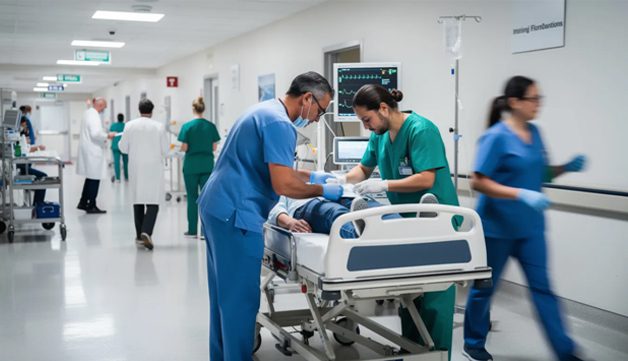
The trend toward unified event and notification platforms continues throughout healthcare organizations. Audio systems no longer operate in isolation—they receive triggers from multiple building systems and respond accordingly.
Nurse call integration examples:
- Code alarms in the ICU broadcast localized tones near staff stations.
- Patient fall detection triggers an immediate audio notification to nursing staff.
- Bed exit alarms generate targeted alerts in specific zones.
Security system connectivity includes:
- Panic buttons in ED triage initiate Code White announcements.
- Duress alarms in psychiatric units trigger staff assistance calls.
- Access control events at restricted areas generate audio alerts.
Building management system (BMS) triggers:
- Water leak detection in sensitive areas
- Refrigeration failure in blood banks or pharmacies
- Negative pressure room alarms in isolation wards
- HVAC faults affecting critical environments
Admoveo engineering support assists consultants in defining I/O mappings and event priorities during design development and construction document phases. This early collaboration guarantees the audio system responds appropriately to events from connected devices and platforms across the facility.
Refining Patient Experience, Privacy, and Sound Environment
Apart from safety and operational functions, an audio system shapes patient comfort, perceived noise levels, and privacy throughout healthcare environments. Hospitals are notoriously noisy places, and research regularly links excessive noise to more gradual recovery, increased stress, and lower patient satisfaction scores.
Sound masking in waiting rooms, registration areas, and multi-bed wards supports HIPAA speech privacy requirements. By raising the ambient noise floor with engineered sound, conversations become less intelligible at a distance—shielding sensitive discussions between medical professionals and patients from being overheard by nearby visitors.
Sound Environment Management
Background music applications:
- Lobbies and family lounges benefit from carefully controlled ambient music.
- Automatic ducking lowers music volume when announcements occur.
- Volume schedules can adjust levels based on the time of day.
Room-level controls enable:
- Staff adjustment in rehab gyms during therapy sessions
- Conference rooms with local volume management
- Cafeterias with different audio needs than patient floors
Admoveo solutions are built to minimize maintenance throughout their active life. There are no local volume pots to fail, firmware updates are deployed remotely, and solid-state designs sustain steady audio quality over many years of 24/7 operation.
Designing for Intelligibility in Challenging Spaces
Some hospital spaces create significant acoustic challenges. High-ceiling atriums, bustling emergency departments, and equipment-filled MRI corridors each provide unique obstacles to explicit communication.
Design recommendations by space type:
| Atriums (30’+ ceilings) | Distributed ceiling arrays, supplemental wall speakers |
| Emergency Departments | High-density coverage, elevated SPL targets |
| MRI Corridors | Non-ferrous speakers, shielded cabling |
| Mechanical Rooms | Horn speakers, visual notification supplements |
| Chapel/Meditation | Low-profile speakers, minimal visual intrusion |
Coordination with the acoustical consultant or MEP engineer helps meet STI or CIS benchmarks in design documents. Admoveo technical teams can model coverage and understandability from reflected ceiling plans, helping architects avoid visually intrusive hardware while meeting performance requirements.
Visual, Mobile, and Multichannel Notification
Audio alone isn’t sufficient in modern hospitals. Staff may be wearing hearing protection in noisy environments. Patients may be hearing-impaired. Some spaces generate enough ambient noise that overhead announcements become difficult to understand.
Effective notification systems deliver messages via multiple channels simultaneously:
- Overhead speakers for corridor and room-level audio
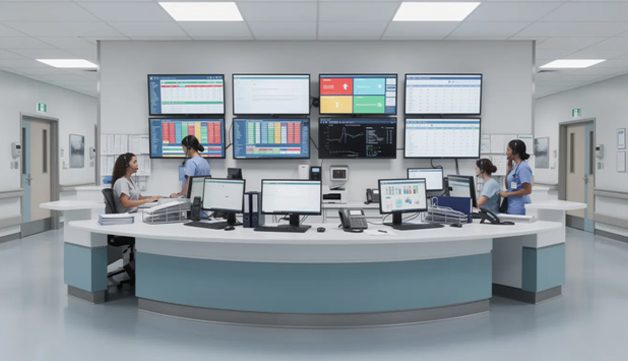
- Visual displays at nurse stations showing code status and alerts
- Multi-color LED indicators for isolation warnings or room status.
- Mobile push notifications for on-call physicians and security teams
- Desktop pop-ups for staff at computer workstations
Integrated audio-visual endpoints combine speakers, message displays, and indicator lights in a single devices. These units reinforce code status, isolation warnings, or evacuation instructions through both audible and visible means.
Mobile device integration permits critical alerts to reach doctors and staff anywhere on campus. When a mass casualty incident occurs, the notification should be heard overhead and displayed on screens—supporting accessibility requirements and guaranteeing redundancy in case a single channel fails.
Use Cases Throughout Different Healthcare Facilities
Different facility types have distinct audio system requirements. Here are particular examples of how healthcare sound systems adjust to various settings:
Mid-Size Community Hospital (200-300 beds):
- Zoned audio for ED surge notifications reaching only relevant staff
- OR schedule updates broadcast to the surgical services areas
- Campus-wide severe weather alerts with outdoor coverage
- Integration with the existing nurse call for code response coordination.
Specialty Clinic or Ambulatory Surgery Center:
- Smaller system footprint with focused coverage
- Patient flow calls for waiting room management.
- Staff coordination paging between procedure rooms
- Discrete code notifications that don’t alarm patients
Behavioral Health or Rehabilitation Facility:
- Calmer soundscapes with non-startling alert tones
- Reduced paging frequency to maintain a therapeutic environment
- Emergency override capability retained for safety events
- Staff-only zones for clinical coordination
Multi-Site Health Systems:
- Centralized control interfaces managing multiple campuses.
- Consistent messaging throughout all connected buildings
- IP audio backbones linking geographically distributed facilities
Unified emergency notification across the organization
Design Support for Engineers and Architects
Admoveo partners with consulting engineers, technology designers, and architects from schematic design through construction and commissioning. This cooperation begins early—during programming and concept phases—when decisions about infrastructure routing and integration points are most flexible.
To receive a comprehensive design guide or further resources related to healthcare sound solutions, please fill out our contact form.
Typical Deliverables for Hospital Projects
Sample Riser Diagrams | Single-line drawings showing system architecture |
Device Schedules | Endpoint counts, locations, and specifications |
CSI-Format Specifications | Division 27 or 28 spec sections ready for bid sets |
Basis-of-Design Narratives | Performance requirements and design rationale |
Zoning Charts | Zone definitions with associated endpoint lists |
Admoveo provides design guides for public address in healthcare that include recommended SPL levels by area type, intelligibility targets, and sample zoning strategies. These resources help specifiers create complete documentation without starting from scratch.
Early coordination with other disciplines—IT, security, fire alarm, nurse call—avoids conflicts and rework during construction. Admoveo can support coordination calls during design and construction phases to verify interface requirements and network capacity.
Our consistently high customer review scores reflect the combination of durable reliability, low upkeep costs, and responsive design support that healthcare facilities need. When architects and engineers verify our track record with existing users, they find systems that perform as specified years after installation.

Lifecycle, Maintenance, and Future-Proofing
Total cost of ownership over 10-15 years matters more than initial equipment cost for most healthcare organizations. A system that requires frequent service calls, replacement parts, or manual updates quickly erodes any upfront savings.
Maintenance advantages of modern IP audio systems:
- Solid-state IP endpoints with no moving parts to wear out
- PoE power eliminates separate electrical circuits.
- Remote diagnostics are reducing the need for on-site visits
- Centralized firmware updates across hundreds of endpoints
- Automated fault reporting to facilities management platforms
Admoveo systems are designed around open standards—SIP protocols, standard IP networking, and documented APIs—that allow the audio infrastructure to evolve with future telephony, nurse call, and security platforms. When the hospital upgrades its phone system or adds a new nurse call vendor, the audio infrastructure adapts rather than requiring replacement.
Recommendations for specifiers:
- Design for scalability with extra capacity for future wings or clinics
- Specify endpoints with field-upgradeable firmware.
- Require documented integration functions with common healthcare platforms.
- Include commissioning and understandability testing in project requirements.
- Involve Admoveo early for right-sized, maintenance-free solutions.
Key Takeaways
Designing healthcare audio products for hospitals requires balancing multiple priorities: life-safety compliance, process efficiency, patient comfort, and long-term maintainability. The systems running through corridors and patient rooms work best when they’re essentially invisible during normal operation—and absolutely reliable when emergencies demand immediate response.
Remember these fundamentals:
- IP-based systems leverage existing network infrastructure for reduced installation costs.
- Granular zoning protects sensitive areas while continuing emergency override capability.
- Integration with nurse call, security, and building systems creates a unified notification system.
- Multichannel delivery ensures that messages reach staff via audio, visual, and mobile channels.
- Maintenance-free design lowers the total cost of ownership over the system lifecycle.
The right audio infrastructure becomes an asset that supports patient care for years without demanding constant attention from facilities teams. When individuals throughout the facility can hear important information clearly—whether routine announcements or critical incidents—the entire operation runs more smoothly.
Next Steps
If you’re designing a PA system for a hospital project, Admoveo Systems can assist with specifications, design guidance, and coordination support. Contact our healthcare team to review your project requirements and receive sample documentation customized to your facility type. Our engineers work alongside architects and consultants to create sound solutions that meet today’s business needs while remaining adaptable for tomorrow’s healthcare environments.