
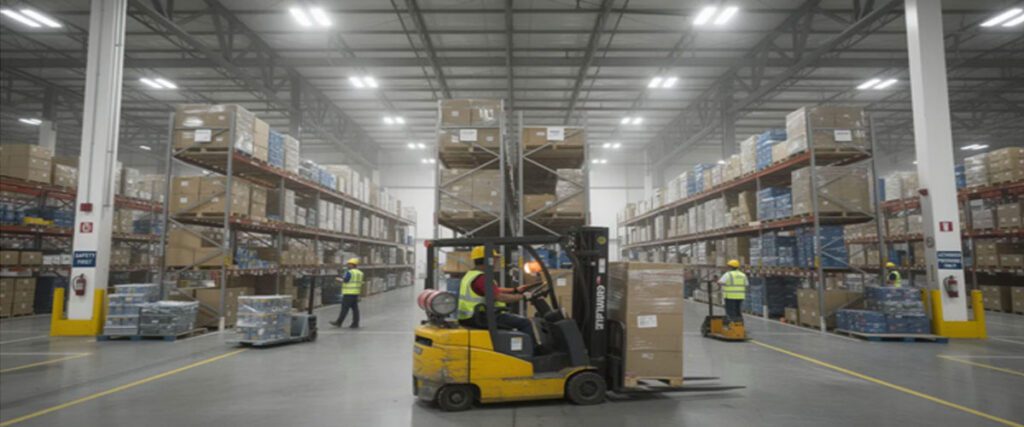
Clear and effective warehouse communication systems are vital to boosting safety and productivity in modern facilities. Learn how modern PA speaker systems make a difference.
Key Takeaways
- Modern warehouse communication must evolve from shouting, phones, and basic radios to integrated systems using the facility’s IP network.
- Admoveo Systems delivers PA speaker systems (Wi-Fi and PoE) for live paging, scheduled tones, and urgent alerts—even in loud, expansive spaces.
- Clear, steady audio improves safety by helping emergency response, enhances productivity through cutting downtime and confusion, and raises morale by guaranteeing everyone receives the same message instantly.
- Network-based speakers are easy to install because they are simply endpoints on existing Ethernet or Wi-Fi infrastructure, minimizing cabling and deployment time.
- Admoveo’s motto, “Nothing Counts Like Service,” means we focus on system design, commissioning support, and technical service.
Why Warehouse Communication Matters in 2026
In 2026, modern distribution centers routinely process tens of thousands of orders per day. Behind every accurately picked item, every on-time shipment, and every safe shift lies a network of clear communication connecting warehouse workers, supervisors, and systems. When that network fails—or never existed in the first place—the entire operation feels the impact.
Warehouses are now louder, larger, and more automated. Old communication methods, such as yelling or using runners, cannot keep up. Warehouse communication needs to evolve.
Consider these realities facing warehouse managers in 2026:
- Noise levels regularly exceed 85 dB from forklifts, conveyors, stretch wrappers, and dock doors—making unamplified speech nearly impossible to understand.
- Warehouses keep growing, often topping 300,000 square feet. Many sites have multi-level mezzanines, long racking aisles, and vast loading zones.
- Workforce expectations have shifted, with warehouse staff expecting timely information about schedules, tasks, and safety rather than having to learn through word of mouth hours later.
- Automation creates new communication expectations, as conveyor jams, robotic sorter alerts, and WMS notifications need to reach the right people within seconds.
Modern Audio communication means making sure everyone receives the right message—about tasks, schedules, or emergencies—and can respond immediately.
Warehouse PA speaker systems safety procedures with audible, facility-wide announcements. PA systems connect the control room with the warehouse floor, keeping everyone informed wherever they are.
Core Benefits of Effective Warehouse Communication
When communication works well, error rates drop, responses quicken, and employees engage more. These improvements increase safety, productivity, and job satisfaction over time.
Here is how effective communication transforms warehouse operations:
Reduced Errors in Picking, Staging, and Loading
Clear, facility-wide audio announcements make certain everyone hears schedule and process changes in real time. When a trailer arrives early at Door 24 or a priority order needs expedited picking, a single page is sent to every affected worker instantly. This direct communication eliminates the telephone game effect, where messages get distorted as they pass from person to person.
Research shows that warehouses with integrated communication systems achieve 20-35% productivity advancements compared to facilities that rely on fragmented methods. Fewer errors mean less rework, fewer inaccuracies in the long run, and happier clients who receive precise orders.
Boosted Safety and Emergency Response
When every person in a 400,000-square-foot facility can hear a single, intelligible message within seconds, crisis reaction times drop dramatically. Worker safety improves when hazard reports, evacuation instructions, and severe weather warnings reach everyone simultaneously rather than spreading unevenly through radio chains.
Poor communication causes about 25% of warehouse accidents. Paging systems can halve response times, giving safety teams more time to act in important incidents.
Improved Morale and Connection
Workers in remote areas—like mezzanines, freezers, or distant docks—often feel cut off. Routine updates and clear, consistent supervisor instructions help them feel included.
When everyone hears announcements at once, confusion disappears. This dependability keeps warehouse teams aligned and engaged through tough shifts.
Better Customer Outcomes
Consistent communication reduces shipping errors, missed deadlines, and misrouted freight. When dock supervisors instantly update pickers about hot orders or delays, warehouses adapt in real time rather than react after the fact.
Common Communication Obstacles in Warehouses
Even efficient warehouses fight noise, distance, and incompatible tech. Identifying these problems is the first step toward real solutions that fix root causes.
High Ambient Noise
- Forklifts, conveyors, stretch wrappers, and dock doorsregularly produce noise exceeding 85 dB. Please visit the resource page for the dB of different speakers
- Unamplified speech becomes unintelligible beyond a few feet in active areas.
- Workers wearing hearing protection face additional barriers to receiving verbal instructions.
- Temporary noise spikes (truck air brakes, product drops, equipment alarms) can drown out even raised voices.
Physical Scale and Dead Zones
- Long aisles stretching hundreds of feet create natural barriers to sound transmission.
- Tall racking (30+ feet) absorbs and deflects audio, creating acoustic shadows.
- Multiple dock doors spread across hundreds of feet separate the receiving and shipping teams.
- Mezzanines, freezers, and outdoor canopies often sit outside the reach of main-floor communication.
- Concrete walls and metal structures block radio signals, creating coverage gaps.
Disjointed Communication Tools
- Teams often use a mix of smartphones, consumer walkie-talkies, and legacy intercom systems that do not integrate with one another.
- Mobile workers carry different devices depending on their role, creating inconsistent access to information.
- Messages get duplicated when someone announces via the radio and then pages separately.
- No single source of truth exists for facility-wide communication.
Process and Protocol Gaps
- Unclear chains of command leave workers unsure who should announce what
- No standard scripts exist for emergency announcements, giving rise to inconsistent messaging.
- No reliable method exists to simultaneously alert every person on shift.
- Bell and break schedules rely on local clocks or supervisors remembering to make announcements.
These issues typically manifest as delayed responses to equipment failures, misplaced pallets that require extended searches, longer downtime during maintenance events, and uncertainty during fire drills or actual alarms. The costs add up in the form of costly delays, frustrated employees, and missed shipment windows.