
Warehouse Paging Systems: Complete Guide to Design, IP Options & Speaker Layout
Getting a clear announcement across a warehouse floor with forklifts running, conveyors humming, and trucks backing into loading docks is nothing like paging within an office. Most facilities that struggle with missed announcements, dead zones, or unintelligible emergency alerts use systems never designed for industrial environments. This guide walks warehouse and facility managers through everything needed to plan, design, and deploy a warehouse paging system that actually works.
Key Takeaways
A warehouse paging system is a PA infrastructure that delivers voice announcements, safety alerts, emergency notifications, and scheduled tones across large, noisy industrial spaces. It is a critical tool for both operational efficiency and OSHA-compliant emergency communication.
Modern warehouse PA systems use WiFI, IP/PoE technology, or hybrid configurations that integrate with existing VoIP phone system platforms. Warehouse paging systems improve safety compliance by delivering immediate evacuation warnings and routine announcements to every occupied area.
You cannot determine how many speakers a warehouse needs from square footage alone. Ceiling height, background noise from conveyor belts and forklifts, and racking density are far more important factors in designing for comprehensive coverage.
Admoveo Systems designs IP speakers specifically for warehouses, distribution centers, loading docks, and break rooms – including emergency paging and bell scheduling.
This article walks facility managers from basics through design, speaker selection, compliance, and how to get a custom layout and a quick quote.
What Is a Warehouse Paging System?
A warehouse paging system is an overhead paging system – often called a PA system – that delivers one-way announcements, emergency alerts, and scheduled tones across large, noisy industrial spaces. These systems broadcast audio or visual messages across large distribution centers, manufacturing plants, and fulfillment hubs where normal conversation is impossible over long distances.
Core components include:
Input devices – microphones, telephone extensions, or VoIP/SIP endpoints
Controllers and amplifiers – analog 70V multi-channel amplifiers or IP paging controllers
Speakers – horn speakers, ceiling speakers, pendant speakers, or weatherproof IP speakers
Infrastructure – Ethernet/PoE network cabling, or WiFi
Zone and scheduling controls – software or hardware that manages zone paging, break bells, and emergency override
Real-world examples include 250,000 sq ft fulfillment centers with dozens of dock doors, regional distribution centers running three shifts, and 24/7 manufacturing plants where multi-zone paging allows messages to be targeted to specific areas. You can page specific personnel or deliver safety alerts across the entire facility without pulling workers off the warehouse floor.
The terms “paging system,” “PA system,” “overhead paging system,” and “IP paging” often overlap in warehouse settings. In practice, they are usually part of the same solution: a single system that handles routine announcements, emergency notifications, and scheduled tones.
Why Warehouses Are Challenging Audio Environments
Most commercial buildings, offices, retail stores, clinics, have 8-to-12-foot ceilings, carpeted floors, and ambient noise levels between 50 and 65 dBA. Warehouses are a different world: concrete floors, steel decking, high ceilings that stretch 20 to 40 feet, and ambient noise that routinely reaches 80 to 90 dBA during active operations.
Warehouse floors often exceed 85 dBA from forklifts, conveyor belts, palletizers, and loading dock activity. The 8-hour permissible noise exposure limit is 90 dBA, which means many warehouse zones sit right at the threshold. Standard office ceiling speakers simply cannot compete. High-output speakers are designed to cut through ambient noise in industrial settings, exactly what these environments demand.

High warehouse ceilings can reduce sound clarity because sound pressure drops significantly as the distance between the speaker and listener increases. A horn speaker mounted at 20 feet must produce far more output to deliver intelligible speech at ear level than one mounted at 10 feet.
Tall pallet racks, mezzanines, and cold rooms create acoustic shadow zones – areas where announcements are blocked or arrive as unintelligible reverb. Each open floor section, loading dock bay, office area, and break room is a distinct acoustic zone that needs its own volume and speaker placement. Without zone management, announcements that are loud enough for the warehouse floor become painfully loud in adjacent offices.
Types of Warehouse Paging Systems: Analog, IP & Hybrid
Most warehouse paging systems today fall into one of three categories: legacy 70V analog, modern IP-based paging systems, or hybrids that bridge both.
70V Analog Systems. A centralized amplifier drives transformer-tapped horn speakers over dedicated 70V wiring. Analog PA systems require dedicated cabling for each zone, but the technology is proven, low-cost per speaker, and highly reliable. For smaller commercial facilities without existing network infrastructure, analog remains a sensible choice.
IP Paging Systems. IP speakers and IP amplifiers run on standard CAT5/6 Ethernet cabling, powered by PoE. IP-based systems allow remote management and VoIP integration, offering flexibility and scalability over traditional setups. Zones are defined in software, not wiring, so reconfiguring coverage as the warehouse grows requires no cable runs. System scalability is necessary for accommodating future warehouse growth – IP paging handles this naturally.
Hybrid Systems. IP paging gateways feed existing 70V amplifiers, letting facilities keep proven analog infrastructure while adding IP speakers in problem areas. Compatibility with existing equipment enhances the value of a new paging system, and a phased migration avoids the cost and disruption of a full rip-and-replace. Wireless PA systems eliminate the need for speaker cabling entirely in areas where running wire is impractical, such as temporary staging zones.
Industry cost ranges reflect this spectrum: small warehouses under 20,000 sq ft may spend $3,000–$6,000, mid-size facilities $10,000–$30,000, and large enterprise deployments $50,000 or more depending on zones and complexity.
How an IP Paging System Works in a Warehouse
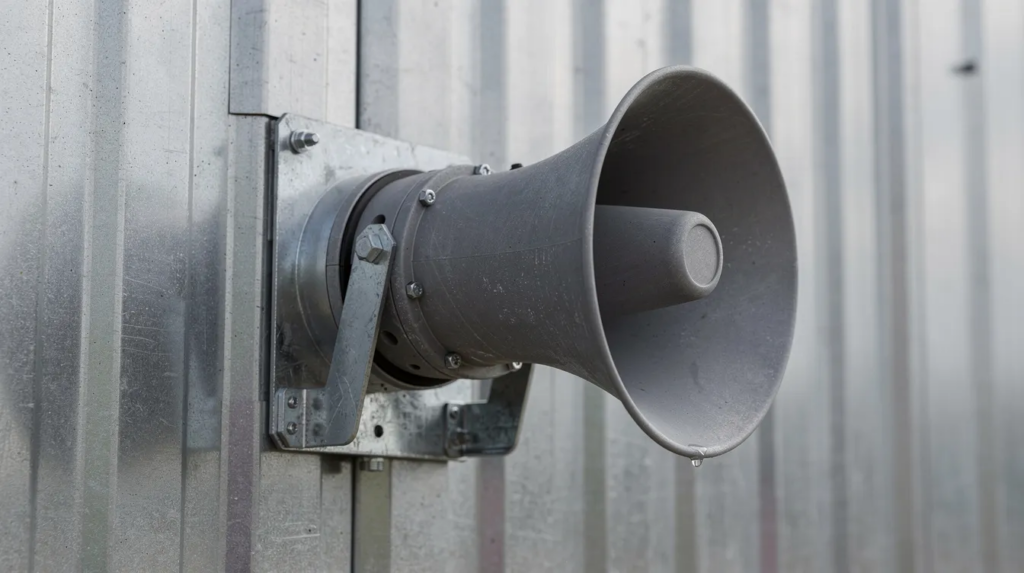
IP paging – also called IP PA – is the modern approach for warehouses that want seamless integration with VoIP platforms and software-based zone controls. Instead of running dedicated audio cable runs from a central amplifier, each IP speaker is a network endpoint.
PoE powered IP speakers receive both power and audio over a single CAT5/6 cable, much like IP security cameras. A single cable run handles everything. IP paging systems use a single CAT5/6 cable for power and audio, which dramatically simplifies installation in facilities that already have network infrastructure.
Each IP speaker or paging gateway registers as an extension on the existing VoIP phone system via SIP. A supervisor can pick up a desk phone, dial a paging code, and reach a specific zone, or the entire facility, without touching a separate control panel. IP paging systems integrate with existing VoIP phone systems, so you don’t need a parallel handset or dedicated paging station.
Multicast zone paging lets you target announcements to specific areas. One audio stream from the server reaches every IP speaker in a defined group – “Loading Dock A,” “Aisles 100–300,” or “Break Rooms” – simultaneously. Zones are created and edited in software, not at a patch panel. They improve operational efficiency by automating announcements and scheduling recurring pages without manual intervention.
Admoveo Systems supplies IP speakers and zone controllers pre-configured for each customer’s network, so local electricians handle mounting and cabling while remote support takes care of the rest.
Designing a Warehouse Paging System: Coverage, Zones, and How Many Speakers
Speaker count is determined by coverage, intelligibility, and zoning requirements – not just square footage. Copying a generic rule like “one speaker per 1,000 sq ft” is how facilities end up with dead zones and wasted budget.
A 20,000 sq ft warehouse with a 25-foot ceiling and moderate noise needs about 5 to 10 horn speakers for the open floor. Noisy or heavily racked areas may need closer spacing. Space horn speakers at about twice their mounting height, so speakers at 25 feet should be roughly 50 feet apart, adjusted for noise and obstructions.
Strategic speaker placement eliminates dead zones throughout a facility. Speaker placement must account for ceiling height and racking: tall racks block sound, mezzanines absorb it, and enclosed offices need dedicated speakers. Additional speakers in loading docks, break rooms, and offices expand coverage without over-amplifying quiet zones.
Basic design process:
Gather floor plans with ceiling heights noted
Measure or estimate ambient noise in each zone during active operations
Identify critical safety areas (exits, high-traffic intersections, hearing-protection zones)
Map speaker locations and define paging zones
Request a custom layout and quote
Admoveo Systems designs layouts from customer floor plans to ensure comprehensive coverage across every zone.
Choosing the Right Speakers for Each Warehouse Area
Different warehouse areas require different speaker types and wattages for clear announcements and compliant emergency pages.
Horn speakers for open warehouse floors, high-bay storage, and loading docks. When ceiling height exceeds 20 feet and ambient noise is high, horn speakers need at least 105 dB SPL for noisy warehouse floors. Selecting high-decibel directional speakers helps ensure sound intelligibility in these environments. The ASH10 (105 dB at 1W/1m, IP66 rated) is a benchmark for industrial horn performance.
Ceiling and wall-mount speakers for offices, conference rooms, and break rooms where comfort matters. These provide wide dispersion at lower output and can handle background music alongside voice announcements. Warehouse PA systems must exceed 85 dBA for clarity, even in quieter zones, while keeping volume lower for comfort.
Weather-rated speakers for loading docks and outdoor yards need environmental ratings that handle dust, moisture, and temperature swings – look for IP66/IP67 or better.
IP speakers are available in all these form factors. Authorized personnel can trigger pre-recorded alerts automatically for breaks or emergencies. Visual paging supplements audio signals with visual indicators like LED displays or strobe lights in zones where hearing protection is worn.
Key Design Factors: Ceiling Height, Noise, and Warehouse Layout
A professional site survey or remote design review is the best way to avoid blind spots and unintelligible pages. Here are the variables that matter most.
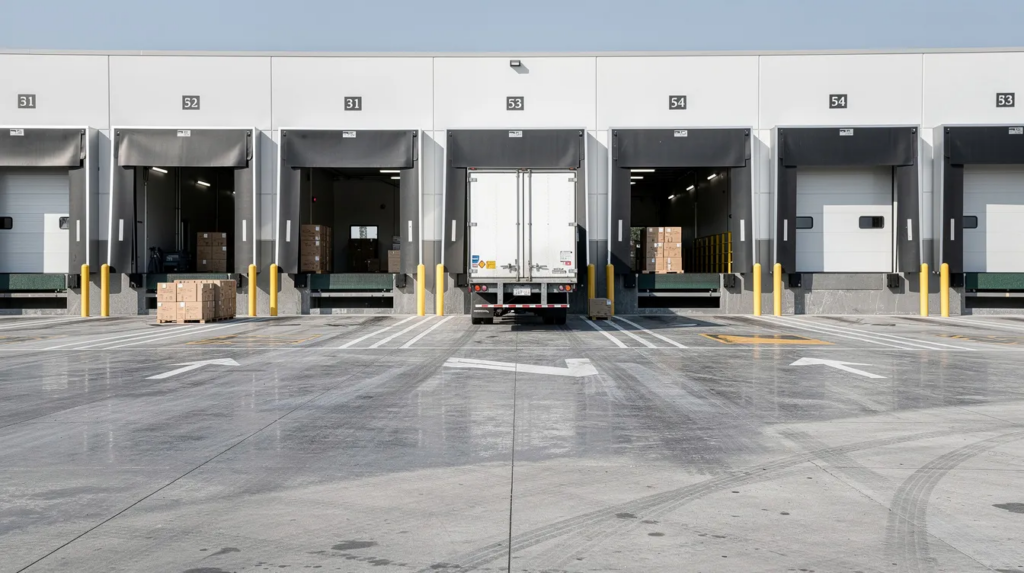
Ceiling height. Higher mounting increases coverage area but reduces sound pressure at ear level. Spacing horns at roughly 1.5 to 2 times their mounting height is a reliable starting point. A 30-foot ceiling may require higher-wattage taps or closer spacing compared to a 20-foot ceiling.
Background noise. Measure during normal operations – forklifts running, conveyors active, compressors cycling – not during quiet hours. Target SPL at ear level should exceed ambient by at least 5–10 dB for speech clarity. More advanced IP systems automatically adjust speaker volume based on environmental noise.
Racking and enclosed areas. Speaker placement must consider dense racking and enclosed areas. Tall racks create acoustic sub-zones; aim horns down aisles or mount them where they minimize blockage. Partitioned offices and mezzanines each need dedicated speakers and, often, separate zones.
Echo and reverberation. Concrete floors and metal roofing reflect sound, creating long reverberation times that degrade intelligibility. Simply turning volume up worsens muddiness. Closer speaker spacing with lower individual output is more effective than fewer, louder speakers.
Note that NEC Article 725 requires CL2 or CL3 rated wiring for paging system installations – confirm cable ratings during the design phase.
Integration with Phone Systems, Break Bells, and Emergency Alerts
Modern warehouse paging systems serve multiple roles: routine announcements, scheduled break bells, two-way communication, and emergency notification. Integration with telephone systems and emergency alarms is essential for centralized control.
Phone system integration. IP paging gateways and IP speakers let supervisors page from existing cloud or on-prem VoIP phones, softphones, or UC platforms. No separate paging handset is needed, staff dial a code from their desk phone or mobile app and reach specific zones instantly.
Break bell and shift-change scheduling. Admoveo Systems’ break bell solutions replace standalone timers with software-controlled schedules. Automated scheduling aids in maintaining timely shift changes and breaks, and tones can vary by zone, so dock workers hear a different bell than office employees.
Emergency alerts. Some systems integrate with fire alarms and emergency protocols. IP paging systems enhance safety by integrating with emergency protocols – a supervisor or security system can trigger pre-recorded evacuation messages, severe weather alerts, or lockdown pages with priority override over all routine pages. Emergency notifications ensure rapid communication of critical information across every occupied space. Two-way intercom functionality enables communication without leaving tasks during an active incident.
Wireless systems let staff alert specific areas without broadcasting to all employees, useful for targeted safety alerts. Downtime is reduced when maintenance alerts are broadcast quickly to the right zone rather than the entire facility.
Admoveo Systems can also integrate synchronized clocks and LED message boards so visual alerts back up audible pages in noisy or hearing-protection areas.
Compliance, Safety, and Reliability Considerations
Clear, intelligible announcements matter as much as loudness for compliance. A system that is technically loud enough but produces garbled speech fails to meet the intent of safety regulations.
OSHA 29 CFR 1910.38 requires emergency action plans that include a means to alert all workers. OSHA 1910.165 mandates alarms be perceived above ambient noise levels; warehouse PA systems must comply with OSHA 1910.165 standards. Non-supervised alarm systems must be tested every two months to verify functionality. ADA requires visual notifications for hearing-impaired employees, so strobe lights and LED message boards often pair with emergency notification systems.
Reliability essentials:
Industrial-grade hardware rated for dust, vibration, and temperature extremes
Redundant amplification or network paths for critical emergency zones
Backup power (battery or generator) for life-safety circuits
Periodic testing of all paging zones, with volume adjustments when layouts change
Firmware updates for IP paging components and visual inspection of speakers on high racks
Admoveo Systems backs its warehouse paging systems with a three-year warranty and lifetime training and technical support, helping facility managers keep systems compliant and operational over time.
Working with Admoveo Systems on a Warehouse Paging Project
Admoveo Systems is a B2B provider specializing in PA system and IP paging solutions for warehouses, manufacturing plants, schools, and commercial facilities across North America. The company designs both new-build systems and phased upgrades that extend the life of existing analog paging while adding IP speakers in problem areas like loading docks or high-noise bays.
Typical engagement process:
Customer provides basic facility information – square footage, ceiling height ranges, noise description, floor plan
Admoveo prepares a recommended speaker layout, equipment list, and zone map
IP paging components are pre-configured before shipping, so local contractors only need to mount hardware and connect network or 70V lines
Lifetime technical support covers configuration changes, firmware updates, and troubleshooting
The right system starts with the right layout. Request a Quick Quote or send your floor plan for a custom speaker design. You can also explore more posts on related topics like factory PA speaker systems and bell break systems for warehouses on the Admoveo Systems site.
FAQs
How many speakers does a typical 50,000 sq ft warehouse need?
For a 50,000 sq ft warehouse with 25–30 ft ceiling height and moderate noise, a typical design uses roughly 16–24 horn speakers for the open floor, plus additional speakers for offices, break rooms, and loading docks. Final speaker count depends on ceiling height, racking density, ambient noise levels, and how many distinct zones the facility requires. A 20,000 sq ft warehouse typically needs 6 to 10 horn speakers just for the main floor, so larger facilities scale accordingly. Admoveo Systems always recommends a custom layout rather than a fixed “one speaker per X sq ft” rule, because acoustic conditions vary dramatically between facilities.
Can I add IP speakers to my existing analog paging system?
Yes. Many facilities keep their existing 70V amplifiers and horn speakers while adding IP speakers in new areas and using an IP paging gateway to bridge between the two technologies. This hybrid approach is common when expanding into new warehouse bays or upgrading high-noise zones like loading docks without replacing the entire legacy PA system. It protects your existing investment while adding the benefits of IP, software-defined zone controls, remote management, and VoIP integration.
Will a warehouse paging system work with my cloud phone or VoIP system?
Most modern IP paging systems integrate with cloud PBXs and VoIP platforms via SIP, allowing staff to dial paging codes from desk phones, softphones, or mobile apps. Admoveo Systems reviews the customer’s phone platform during design and pre-configures IP paging endpoints to register cleanly with the chosen provider, whether that is Cisco, Avaya, RingCentral, or another platform.
What is the difference between a paging system and my fire alarm?
Fire alarm and voice evacuation systems are code-regulated life-safety systems designed, installed, and inspected under standards like NFPA 72. Paging systems are primarily for operations and non-code-mandated communication, including shift changes, safety alerts, and routine announcements. In some projects, the paging system can play pre-recorded emergency messages triggered by security systems or fire panels, but local codes and the Authority Having Jurisdiction (AHJ) always govern final compliance requirements.
How much should I budget for a warehouse paging system?
For small warehouses under 20,000 sq ft, hardware costs for a basic analog or entry-level IP system typically run a few thousand dollars. Mid-size facilities with multiple zones and moderate speaker counts fall in the $10,000–$30,000 range. Large facilities requiring dozens of IP speakers, multiple zone controllers, and emergency integration can run into the tens of thousands or more, excluding installation labor. Contact Admoveo Systems for a Quick Quote based on your actual square footage, ceiling height, existing PA infrastructure, and whether you prefer 70V, IP, or hybrid paging systems.