
PA Speaker Systems - Complete Communication Solutions
Improve Your Facility’s Communication
Clear, dependable communication across your facility isn’t optional—it’s essential for daily operations and critical during emergencies.
Schools struggle with announcements that don’t reach every classroom. Universities find their aging systems unable to provide enough volume across sprawling campuses. Businesses discover their paging system doesn’t communicate effectively within the warehouse or manufacturing plant. Government facilities face compliance gaps when audio signals fail to reach designated zones.
Modern PA speaker systems solve these problems by producing consistent, intelligible sound to every corner of your facility. These systems boost sound volume and clarity, ensuring speech or music is heard clearly even in large or noisy environments. Unlike basic audio equipment designed for music playback or small venues, professional PA systems are built specifically for voice clarity, emergency reliability, and effortless integration with your existing infrastructure.
What separates a quality PA speaker system from standard loudspeakers? Public address systems are designed to deliver clear, consistent sound from multiple broadcast points for live voice paging, prerecorded emergency response messages, and an accurate, reliable bell break system.
Modern PA systems use the facilities’ network by connecting Wi-Fi speakers or PoE speakers. Purpose-built components, network integration features, and the power to drive clear, loud announcements through distances that would defeat consumer-grade speakers set such a system apart.
What You’ll Discover About PA Speaker Systems and Audio Signals
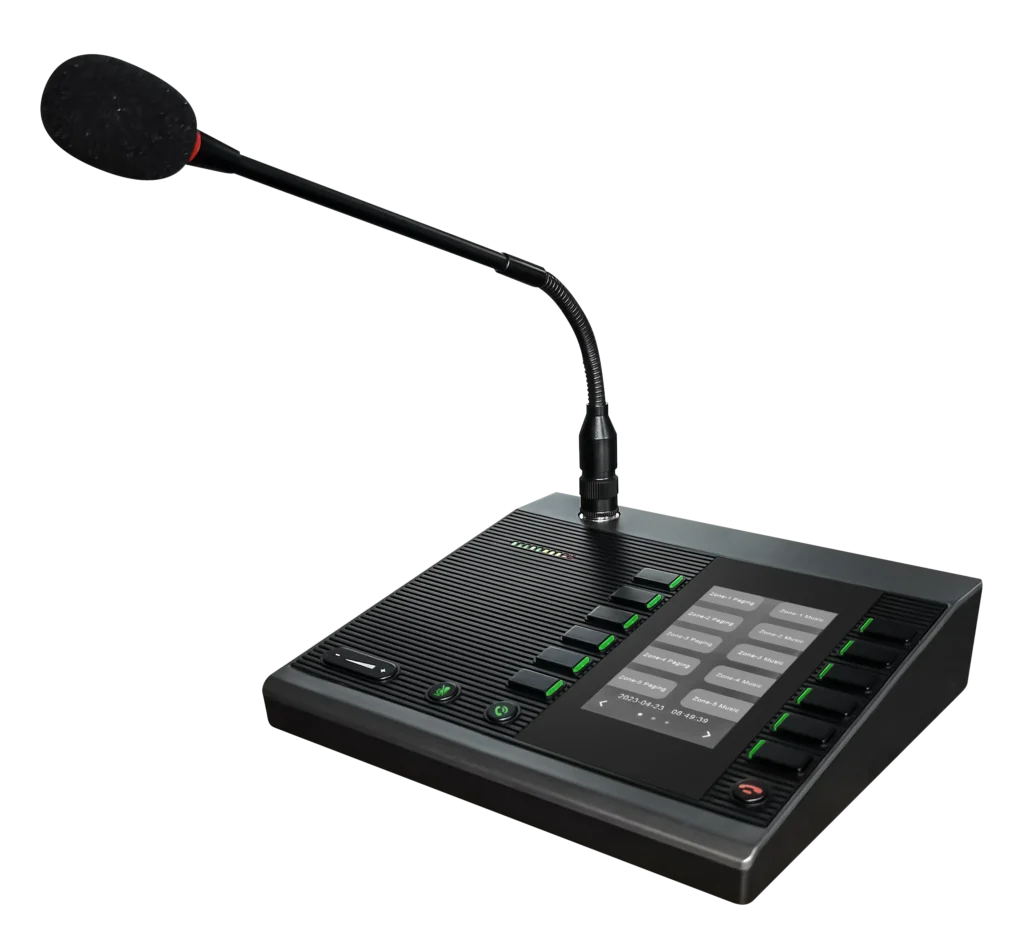
- Basic components that make PA systems reliable for critical communications. The foundation of any effective PA system includes microphones for input sources, a power amplifier for amplifying sound, and speakers designed to provide even coverage. The system includes a SIP server to control the messaging. The SIP server is the headend of a public address system. The audio speakers are just endpoints on your network and have built-in amplifiers.
- Advantages of PoE and Wi-Fi wireless technologies for modern installations. Power over Ethernet technology delivers both power and data through a single cable, eliminating the need of separate electrical runs that can cost $5-15 per foot in retrofit situations. Wi-Fi wireless PA speakers support multicast streaming with latencies under 50ms, perfect for synchronized announcements across multiple zones. These network-based systems reduce installation time by up to 70% as opposed to traditional wired approaches.
- Coverage planning strategies for different facility types and sizes. Effective coverage depends on speaker placement, coverage patterns (typically 90°x50° or 110°x70°), and power handling matched to your space. A system delivering 120dB max SPL can fill rooms seating several hundred people, while office environments with 50-60dB ambient noise floors require 90-100dB overhead for clear intelligibility. Professional assessment guarantees you receive the right speaker locations and helps set up and calibrate the system without over-specification that inflates costs.
- Integration features with existing building management systems. SIP-compatible endpoints integrate directly with VoIP phone systems for zoned paging. IP-based PA systems connect to fire safety panels, security systems, and building automation for coordinated emergency response. This implementation, often discussed in the introduction or system planning phase, means your PA system becomes part of your facility’s communication backbone rather than an isolated audio solution.
- Maintenance requirements and extended reliability factors. Network-managed PA systems enable remote diagnostics and firmware updates without the need for on-site service calls. PoE speakers draw power from centralized switches with battery backup, ensuring operation during outages. Quality systems achieve 99% uptime with proper installation and support, and considering price and sale promotions can make these reliable solutions more affordable and cost-effective.
Who PA Speaker Systems Are For
- Educational institutions need clear emergency and daily announcements. Schools and universities require systems that reach every classroom, gymnasium, cafeteria, and outdoor area. Whether communicating routine schedule changes or critical lockdown instructions, students and staff must hear every word clearly. The majority of educational environments require three system functions: live voice announcements, bell scheduling, and emergency response.
- Businesses need efficient internal communication systems. From warehouse paging to manufacturing plant operations, businesses depend on PA systems to keep operations functioning seamlessly. Manufacturing floors need speakers that cut through ambient noise. Retail locations require compact, mounted units that harmonize with décor while delivering clear audio. Corporate campuses benefit from zoned systems that can play background music in common areas while carrying announcements to specific departments.
- Government facilities with security and safety communication requirements. Compliance standards demand dependable communication systems for emergency response. Government buildings need PA systems that integrate with security procedures, support priority override for emergency announcements, and stay operational during power disruptions. Courthouses, administrative buildings, and public service centers all require the elevated reliability that professional PA systems deliver. For larger venues and audiences, more powerful speakers are necessary to ensure adequate sound coverage.
- Healthcare facilities demand trustworthy communication between patients and staff. Hospitals and clinics use PA systems for code announcements, staff paging, and patient communication. These environments demand systems with precise zone control—announcements that reach nurse stations without disturbing patient rooms. The ability to adjust volume by location and time ensures appropriate communication throughout the facility. Network PA system speakers offer a variety of indoor and outdoor speakers.
Why Upgrade Your Communication System for Amplifying Sound Now
Aging analog PA systems present growing risks that compound over time. Components manufactured decades ago are no longer in stock, leaving facilities vulnerable to failures without readily available replacements. Sound quality degrades as speakers deteriorate, making announcements difficult to hear and potentially dangerous during emergencies.
Modern safety requirements have developed considerably. Fire codes, ADA compliance, and emergency preparedness standards now expect integration functions that legacy systems simply cannot provide. A system that worked adequately in 2005 may no longer meet current emergency notification compliance requirements.
The cost benefits of PoE and wireless PA systems go beyond installation savings. Eliminating dedicated audio wiring reduces initial costs by 40-60% in retrofit scenarios. The scale of savings increases with facility size—what begins as a modest per-speaker advantage can double or triple across a campus deployment.
Reliability improvements in modern systems come from network redundancy and simplified architecture with fewer failure points. The SIP network speakers are nothing more then an endpoint on your network.
System Components
A well-designed PA system is built from several essential components that work together to deliver clear, powerful sound to your staff, employees, and everyone located at the facility. A SIP server, speakers, and a microphone are all that is needed.
Modern PA systems commonly include advanced features such as equalization, compression, and feedback reduction, supporting precise adjustments and lessening unwanted noise and distortion. These all-in-one systems are designed to provide enough volume and sound quality for smaller facilities, while still offering the flexibility and control needed to deliver professional results.
Organizational Considerations
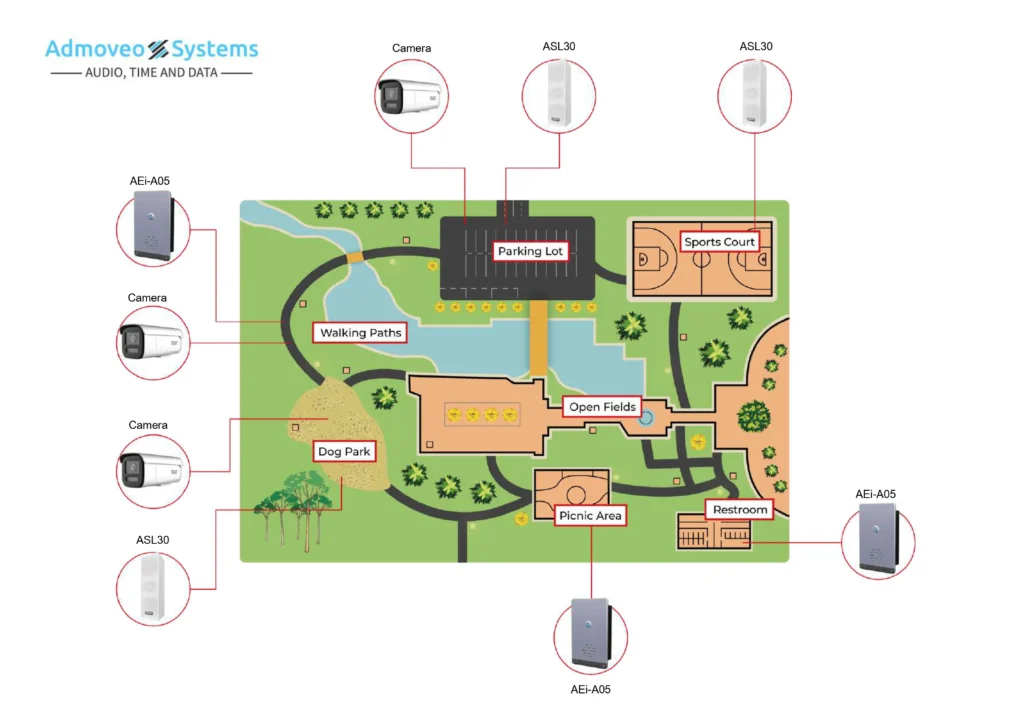
Choosing the right PA system starts with understanding your venue’s unique requirements. Every space presents its own acoustic challenges, and the system must be designed to deliver sufficient volume and clarity to reach the entire organization. At Admoveo, we can easily determine the number of speakers to ensure complete coverage.
Wireless Options
Wireless technology has transformed the adaptability and convenience of modern PA systems. Wireless speakers add another degree of versatility, allowing you to install a system without running Ethernet cables. These Wi-Fi speakers use existing network infrastructure to deliver audio.
Choose the Right PA Systems
Admoveo Systems approaches every PA project as a custom solution customized to your facility’s specific needs. Cookie-cutter products don’t account for your building’s acoustics, your operational requirements, or your integration needs. We commence by understanding how you communicate today and how you need to communicate tomorrow.Learn more about our products designed to deliver customizable solutions.
“Nothing Counts Like Service” isn’t just a motto—it’s our commitment to assisting your system starting at initial consultation through years of operation. When you call with a question, you reach people who know your installation and can provide immediate guidance. Our technical support team understands that a PA system failure isn’t an inconvenience; it’s a communication breakdown that affects your entire operation.
Every project starts with a free consultation and facility assessment. We evaluate your spaces, identify coverage requirements, review existing infrastructure, and recommend solutions that match your budget and performance needs. You’ll receive detailed documentation showing speaker locations, coverage patterns, and integration points before any installation begins.
Our quality product guarantee guarantees you get PA systems that perform to specification from day one. Ongoing technical support implies you’re never left to troubleshoot alone.
Common Questions About PA Speaker Systems
PoE speakers receive power directly from network switches, eliminating the need for dedicated electrical circuits at speaker locations. Standard PoE provides 15.4W per port, while PoE+ delivers 30W, and high-power variants supply 60-90W for larger speakers. Centralized switch power is easier to protect with a UPS battery backup than distributed outlets throughout a building.
Wi-Fi speaker solution requires a strong Wi-Fi signal and AC power where you want to locate the speaker.
Wi-Fi PA speakers perform effectively as long as the Wi-Fi signals are strong. Quality systems use the 2.4 GHz band, a time-tested frequency for network speakers.
Admoveo Systems backs its products with full warranty coverage, ongoing training, and customer support. Our support team provides remote troubleshooting, firmware updates, and on-site service when needed. We believe quality products deserve quality support—because nothing counts like service when your communication system is critical to your operation.
Your facility deserves communication systems that work flawlessly every time. Contact Admoveo Systems for a free consultation, plus discover the PA speaker system solution created for your specific needs.