
Alert Bell Systems – Streamline Your Facility’s Communication & Scheduling
Reliable automated alerts that keep schools running on schedule and manufacturing facilities operating at peak efficiency.
Transform Your Daily Operations with Modern Alert Bell Technology
Each missed bell causes confusion, delays, or missed alerts. If you rely on manual bells or old systems, you work harder and risk communication disconnects.
Modern alert bell systems eliminate these problems entirely. Automated scheduling guarantees every class period, shift change, and break notification happens precisely when it should—without anyone having to remember to push a button.
Whether you manage a busy school bell system coordinating thousands of students or a factory floor where audible alerts must cut through machinery noise, the right system keeps everyone updated and your operations functioning efficiently. Alert bell systems also improve safety and communication in schools and healthcare facilities.
Discover how today’s PoE and Wi-Fi wireless technology transforms facility communication with flexible installation, crystal-clear audio, and bell-scheduling software that adjusts to your needs. Modern alert bell systems have been shown to improve crisis response times and strengthen communication in schools and production facilities.
Our project management and onboarding training have users learning the system quickly. These systems can play different audio tones, music, or signals at scheduled times, letting you customize what the system plays to suit your organization’s specific needs.
Why Choose Professional Alert Bell Systems?
The key differentiators of professional alert bell systems are reliability, coverage, and control. Here’s how top systems stand out from basic bells:
Automated Scheduling Eliminates Human Error – Bell scheduling software handles your entire day, week, and year—including holidays, special events, and schedule variations. No more missed alerts because someone forgot or the manual timer malfunctioned.
Crystal-Clear Audio That Penetrates Noise – High-output speakers designed for warehouses, factories, and busy schools ensure alerts reach every corner of your facility. When safety alerts need to cut through industrial noise, audio intelligibility isn’t optional.
Wireless Technology Reduces Installation Complexity – PoE and Wi-Fi systems require minimal wiring, keeping them ideal for retrofitting existing buildings. Installation costs drop significantly when you don’t need to run cable through walls and ceilings.
Multi-Zone Capabilities for Targeted Communication – Different areas receive different alerts at different times. The warehouse hears shift change tones while the front office stays quiet—or emergency alerts reach everyone simultaneously when needed.
Smooth Integration with Existing Infrastructure – Professional systems connect with your current PA systems, building networks and automation platforms. Add modern bell functionality without replacing everything you already have.
With Admoveo Systems, you get the power of state-of-the-art communication technology without the complexity—designed for schools, businesses, and manufacturing facilities that need results they can count on.
How Alert Bell Systems Work
Getting the right system installed is simpler than you might expect. Here’s how the process works:
Step 1: Professional Facility Assessment Our team evaluates your facility’s acoustic needs, layout, and specific requirements. We identify noise challenges, coverage gaps, and integration opportunities with your existing systems. This ensures your system is designed around how you actually work.
Step 2: Strategic Speaker Placement and Network Configuration. Based on the assessment, we choose optimal speaker locations to ensure complete coverage. Wireless systems connect through your existing network infrastructure, while PoE installations require only standard Ethernet cabling to each unit.
Step 3: Custom Schedule and Tone Programming. Your bell scheduling software gets configured with your exact needs—class periods, shift changes, break notifications, and crisis procedures. You choose the tones that work best for your environment, from traditional school bell sounds to distinct alert patterns for manufacturing facilities.
Step 4: Training and Activation with Ongoing Support. Staff receive hands-on training for schedule management and system adjustments. Once activated, your system runs automatically while our attentive customer support team remains available for any concerns or modifications you need.

Notification Methods
A modern bell system is only as effective as its ability to communicate alerts clearly and reliably to everyone in your facility. That’s why today’s systems are designed with flexible notification methods to satisfy the diverse needs of manufacturing facilities, schools, warehouses, and small businesses. Key features offer a range of alert options—audible tones, voice messages, and visual signals—so you can tailor notifications for shift changes, breaks, emergencies, or daily routines.
Within environments like factories and warehouses, where background noise can drown out standard bells, high-powered speakers deliver crisp, audible alerts that cut through even the loudest machinery. In schools, the bell system can be smoothly integrated with existing school bell infrastructure, guaranteeing every class change and emergency alert is communicated without confusion nor delay.
Integration represents another essential aspect. The bell system can connect with your current PA systems, intercoms, and even digital signage, creating a unified communication network across your facility. For businesses that require greater flexibility, notifications can be customized to include email, SMS, or mobile app alerts, ensuring employees and staff receive important updates wherever they are.
With these adaptable notification methods, your bell system is designed to fulfill the unique communication needs of your facility, keeping everyone informed, safe, and on schedule.
Scheduling and Timing
A reliable bell system relies on its ability to manage time and schedules with accuracy and flexibility. Modern systems incorporate cutting-edge scheduling tools that let you set and adjust bell times for shift changes, class periods, and breaks with ease. Whether you need a weekly routine or calendar-based schedule, the system can be programmed to meet your particular operational needs.
Primary functions include setting exceptions for holidays, special events, or unexpected closures, so your bell system always reflects the current schedule. Immediate updates and notifications keep you and your team informed of any changes, delays, or cancellations, guaranteeing everyone stays on the same page.
Easy-to-use interfaces make it simple to set and manage schedules. With drag-and-drop tools, calendar views, and automatic alerts, you can quickly adjust bell times to accommodate changes in your day-to-day operations. This flexibility guarantees your bell system conforms to your needs, helping you maintain order and capability throughout the workday.
What Makes Modern Alert Bell Systems Different?
Modern alert bell systems stand out from older electric bells based on several distinct features:
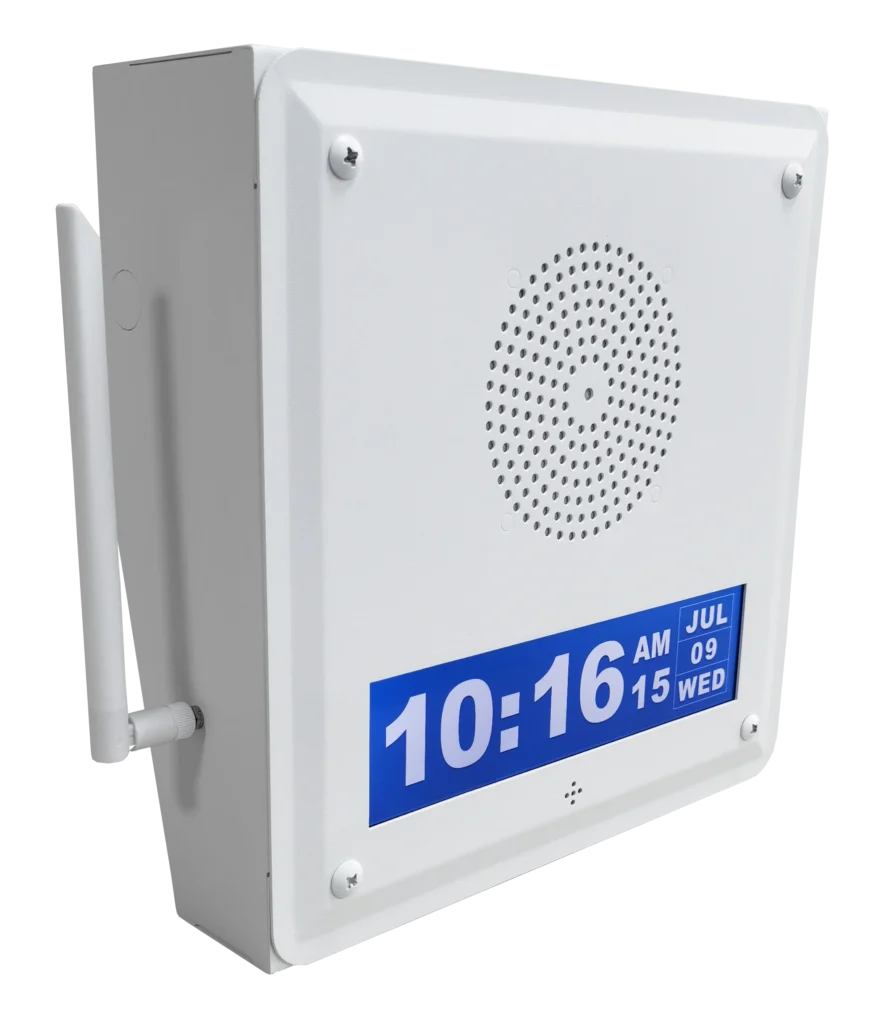
PoE and Wi-Fi Connectivity – Wireless installation eliminates the extensive wiring that made older systems expensive and disruptive to install. A single Ethernet cable can deliver both power and data to each speaker, dramatically simplifying deployment. In production settings such as factories and warehouses, alert systems use loud mechanical or fire bells, horns, and multi-tone buzzers to ensure alerts are heard in loud environments.
Intelligent Scheduling Software – Program complex schedules with holiday calendars, early dismissal days, and special event overrides. The software handles variations automatically, so you set it once and adjust only when your needs change. Time synchronization features guarantee all facility clocks are aligned with scheduled alerts.
Visual Alert Integration – LED displays and beacon lights ensure alerts reach employees and students in loud-noise environments or people with hearing impairment. Multiple communication channels mean no one misses critical notifications. Alert bell systems include mechanical bells, sirens, horns, and strobe lights, designed for hospitals, schools, and factories.
Emergency Override Capabilities – When an emergency occurs, override scheduled programming instantly for facility-wide alerts. Security integration permits authorized personnel to activate immediate notifications from multiple access points.
Mobile App Control – Make real-time schedule adjustments from anywhere using web-based or mobile interfaces. Helpful for administrators managing multiple buildings or responding to last-minute changes.
Customizable Audio Playback – Modern alert bell systems can play different tones, music, or signals to suit particular organizational needs, such as school bells, emergency alerts, or background sounds.
Central Control Units and Backup Power – Centralized management simplifies system oversight. Battery backup ensures performance during power outages and maintains critical alert functions.
Two-Way Communication – Advanced alert systems support two-way communication, enabling staff to request specific help without leaving their location.
Industries We Serve
Alert bell systems fulfill the communication needs of facilities across multiple sectors:
Manufacturing Facilities Shift changes and break notifications must reach every employee across production floors, warehouses, and outdoor loading areas. High-output systems cut through machinery noise while zone control prevents disruption in offices and meeting spaces. Our systems are trusted by factories throughout the USA.
Schools and universities. A reliable school bell system coordinates class periods for hundreds or thousands of students across multiple buildings. Emergency lockdown alerts, fire evacuation tones, and daily scheduling all run through a single integrated system. Thanks to wireless technology, even older school buildings can be upgraded without major construction.
Healthcare Facilities Staff scheduling, code alerts, and patient care coordination require clear, dependable communication. Zone control allows different departments to operate on different schedules while continuing facility-wide emergency capabilities.
Government Buildings Security alerts, meeting notifications, and public address capabilities serve the particular needs of government facilities. Connection to existing security systems guarantees comprehensive communication during normal operations and emergencies.
Small Business and Corporate Offices Meeting reminders, evacuation procedures, and daily schedules benefit from automated systems. Corporate campuses with multiple buildings coordinate via centralized control with zone-specific programming.
System Components & Features
A complete alert bell system includes several integrated components designed to work together:
High-Output Wireless Speakers Industrial-grade speakers engineered for manufacturing environments, gymnasiums, and outdoor areas. Weather-resistant choices guarantee reliable operation in challenging conditions. Audio output is suited for facilities where background noise is a constant factor.
Central Control Units The system’s brain monitors all devices, executes scheduled programming, and manages emergency overrides. Backup power provides continued operation during outages, while network redundancy maintains connectivity if primary systems fail.
Zone Controllers enable targeted messaging and independent volume control for different facility areas. Program zone-specific schedules while continuing the ability to broadcast facility-wide when needed.
Integration Modules Connect with existing intercom systems, PA infrastructure, and building automation platforms. Add bell functionality to current investments rather than requiring complete replacement.
Management Interfaces Web-based and mobile platforms allow authorized users to adjust schedules, monitor system status, and trigger alerts from anywhere. Simple interfaces ensure staff can manage day-to-day operations without specialized knowledge.
Implementation and Optimization
Implementing a bell system that really meets your facility’s needs requires deliberate planning and ongoing optimization. The process starts with a precise assessment of your space, taking into account the number of employees, students, or visitors, as well as the unique layout of your premises. The system is designed to be scalable, so it can expand and adjust as your needs change—whether you’re adding new buildings, expanding your workforce, or updating your communication infrastructure.
Compatibility is vital. Your bell system can be integrated with existing PA systems, intercoms, and digital signage, allowing a smooth transition and maximizing your current investments. Real-time tracking and reporting tools deliver valuable insights into system performance, allowing you to identify issues quickly and create data-driven improvements.
To ensure your team can use the system proficiently, extensive training and support resources are provided, including user manuals, tutorial videos, and responsive customer support. Safety and security are built in, with features such as emergency notification protocols, panic buttons, and secure authentication to protect your facility and stop unauthorized access.
By centering on these key features, your bell system is designed to ensure dependable communication, improve safety, and adapt to the changing needs of your business, school, or manufacturing facility—today and in the future.
Frequently Asked Questions
Nothing Counts Like Service. That’s why schools, manufacturers, and government facilities across the USA trust Admoveo Systems for reliable alert bell systems backed by committed customer support.
🔒Trusted by Educational Institutions | Manufacturing Leaders | Government Facilities Nationwide